Read the weather.
Plan the work.
Find trusted local weather sources and learn what the numbers mean for your crops, livestock and crew. From the first frost to the next irrigation, start with the place you farm.
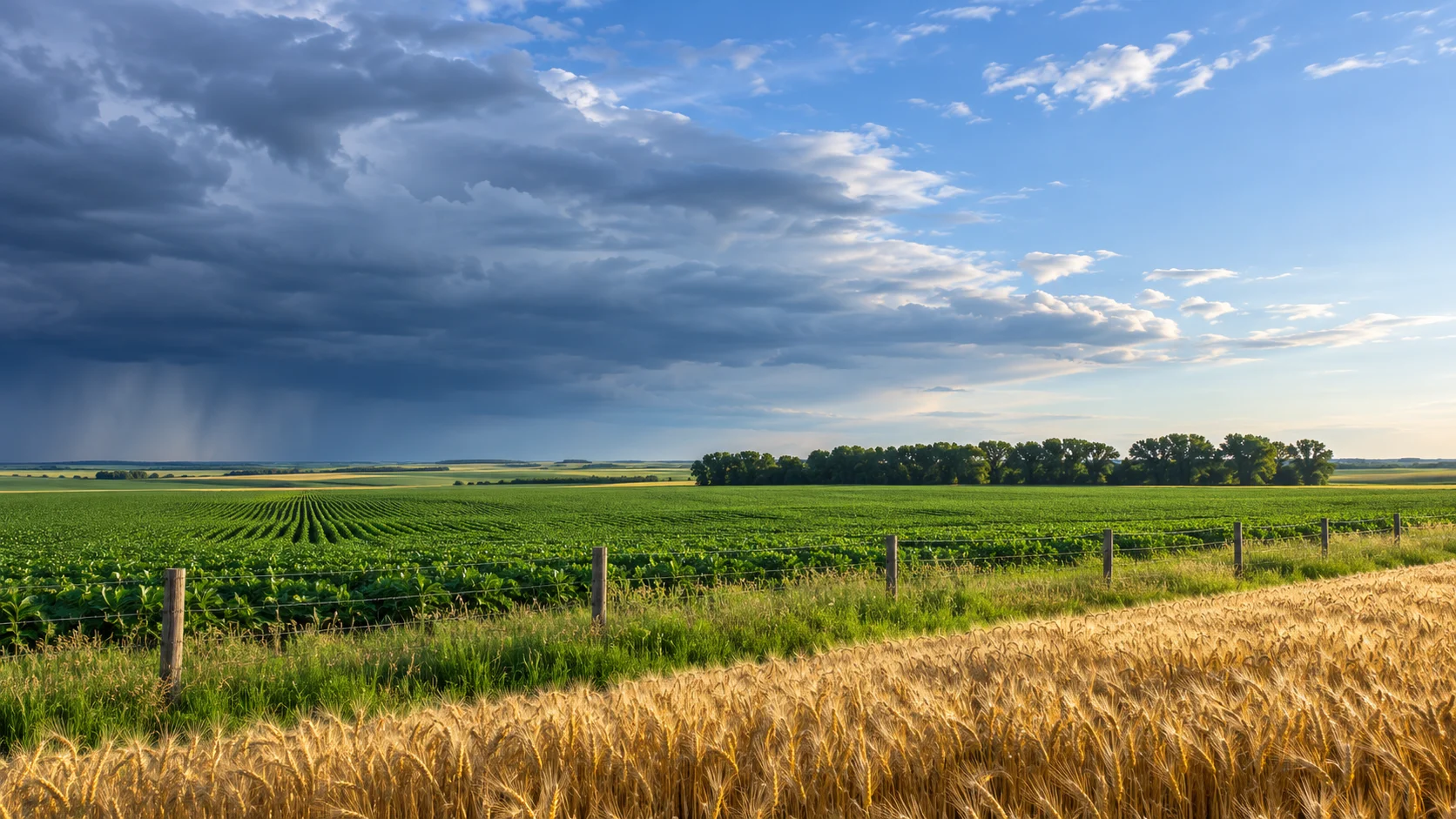
Start with your location
Official forecasts, agricultural networks, local expertise and broadcast weather, organized by coverage.
Understand the next decision
Forecasts & weather observations
Understand timing, probability, station exposure and the difference between predictions and measurements.
Prepare for cold nightsFrost, freezes & crop protection
Connect temperature and duration with crop stage, terrain and the protection method.
Check the spray windowSpray weather & drift awareness
Use field conditions, sensitive-area checks and the current pesticide label together.
Account for crop waterRainfall, soil water & irrigation
Turn rainfall, crop use and measured delivery into a defensible root-zone water budget.
Track a developing droughtDrought, forage & water supplies
Read regional drought indicators alongside farm water, soil and feed records.
Plan for heatHeat, animal comfort & worker exposure
Assess people and animals in their occupied environment, including nights and power interruptions.
Prepare for winter exposureCold, ice & winter readiness
Include wind, wetness, water access, shelter and safe travel in cold-weather decisions.
Prepare before the warningStorms, lightning & safe farm work
Connect forecasts and warnings with shelter, communications, safe shutdown and recovery.
Understand the water pathwayFlooding, drainage & wet-ground access
Check upstream rain, low crossings, soil support and safe access before water rises.
Use the right basin and local warningHurricanes, typhoons & tropical rainfall
Prepare for wind, flood, coastal water, access loss and lengthy utility interruptions.
Reduce the chance of ignitionFire weather, smoke & ignition prevention
Read fire-weather information with local restrictions, equipment exposure and escape access.
Plan for a range of seasonsClimate records & seasonal outlooks
Interpret probabilities, climate baselines and development models without overpromising precision.
Hear the forecast closer to home
A local voice for changing conditions.
Find television weather teams, public and agricultural radio, and NOAA Weather Radio information. Choose a source whose service area includes the farm.
Browse television & radio →- Coverage areas and nearby markets
- Direct station weather and newsroom links
- Radio reception and transmitter resources
- Caribbean and Pacific island sources